Reviewing Neuroscience Icons for Embroidery Projects
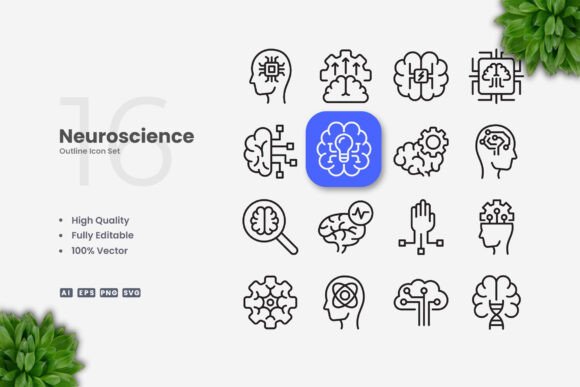
As a designer who spends half my life staring at pixel-perfect vectors and the other half troubleshooting thread tension on an embroidery machine, I have developed a keen eye for what translates well from screen to fabric. When evaluating a new asset like Neuroscience Icons, I am not just looking at the visual appeal; I am assessing its structural integrity as a stitched product. The description highlights that these are simple and clean icon designs, which immediately signals a specific use case: clarity under magnification. In the world of embroidery, simplicity is often the difference between a professional finish and a tangled mess.
First Impressions and Visual Personality
The first thing that strikes me about Neuroscience Icons is its restraint. In a market saturated with overly detailed, intricate patterns that demand high-end machines and expensive threads, clean lines offer a refreshing alternative. These icons possess a modern, minimalist mood. They feel clinical yet approachable, scientific but warm. This visual personality makes them incredibly versatile for branding and personal projects alike.
Because the design allows you to resize, change color, or edit stroke weight, it offers a level of flexibility that many static embroidery files lack. For a designer, this means the asset is not just a final image but a building block. You can tweak the stroke weight to ensure that when the satin stitch is applied, the edges remain crisp without bleeding into one another. The clean geometry suggests that these graphics will hold their shape well, even after multiple washes, which is a critical factor for any handmade product intended for long-term use.
Real-World Application: The Custom Tote Bag Scenario
To truly understand the value of Neuroscience Icons, let’s imagine a real project. Suppose you are an Etsy seller preparing a batch of custom embroidered tote bags for a local science conference or a university department gift shop. You need something that looks professional, represents the field accurately, and appeals to students and professors alike.
Using a complex floral pattern might distract from the message, while a text-heavy design could become illegible in smaller sizes. Neuroscience Icons hits the sweet spot. Imagine a single, well-placed icon of a neuron or a brain structure centered on the chest of a canvas tote. The clean lines stand out against the textured fabric of the bag. Because the design is scalable, you can create a cohesive collection: a small icon for a keychain patch, a medium-sized graphic for the tote bag, and a larger version for a sweatshirt. This consistency builds brand recognition, which is essential for any craft business or small shop product.
The versatility extends beyond apparel. Consider a set of kitchen towels for a housewarming gift for a medical resident. A clean neuroscience icon embroidered on a linen towel adds a touch of personality without being overwhelming. It transforms a utilitarian item into a personalized gift that feels thoughtful and curated. The same applies to baby items; a soft, simple icon on a muslin blanket or burp cloth can serve as early educational decor, blending seamlessly into a nursery aesthetic.
Technical Performance and Stitching Clarity
When translating digital graphics to physical embroidery, several technical factors come into play. Neuroscience Icons, described as simple and clean, generally performs well in terms of stitch density. However, "simple" does not mean "easy." It requires precision. The clean lines rely heavily on proper stabilizer usage and correct hoop size selection to prevent distortion.
For best results, these icons should be executed with a combination of satin stitches for outlines and fill stitches for solid areas if the design calls for it. The ability to edit stroke weight is crucial here. If the original vector has a thin line, increasing the stroke weight before converting to an embroidery file ensures that the satin stitch has enough room to lay flat. Thin lines on thick fabric can pucker, while overly thick lines can look bulky and unnatural.
Thread color contrast is another vital element. On dark fabrics, such as navy or black cotton tees, light-colored threads (white, silver, or pastel) will make the clean lines pop, emphasizing the modern aesthetic. On light fabrics, darker threads provide a sharp, graphic contrast. Testing these combinations in black and white mockups before committing to thread spools can save time and material, ensuring that the visual hierarchy remains intact regardless of color choice.
Where to Exercise Caution
While Neuroscience Icons is highly adaptable, there are scenarios where caution is advised. Small hoop sizes present a challenge for any design, no matter how simple. If the icon contains fine details or tiny negative space, stitching it too small may result in a loss of definition. Always inspect small details closely during the digitizing or setup phase.
Textured fabrics, such as terry cloth or heavy denim, can obscure clean lines. The uneven surface may cause the thread to sit inconsistently, blurring the sharp edges that define this style. Similarly, stretchy fabrics require additional stabilization to prevent the design from warping. Curved surfaces, like caps or hats, also demand careful placement. An icon that looks perfect on a flat piece of scrap fabric may distort when pulled around the curve of a cap front.
Additionally, products that undergo frequent washing, such as aprons or dish towels, benefit from denser stitching to withstand abrasion. While the clean lines are aesthetically pleasing, they must be structurally sound to maintain their appearance over time. Decorative accents on garments that see heavy wear should be placed away from high-friction areas.
Impact on Product Value and Customer Trust
In the competitive landscape of handmade goods and digital assets, presentation is everything. A well-executed embroidery project using Neuroscience Icons conveys professionalism and attention to detail. Customers associate clean, precise stitching with quality craftsmanship. This perception directly influences buyer engagement and trust.
For commercial embroidery projects, the scalability of these icons allows for efficient production. Whether creating a series of embroidered patches for a club or designing printable mockups for digital product previews, the consistent style ensures that your brand identity remains strong across all touchpoints. This consistency is particularly valuable for boutique branding, where every item must reflect a unified vision.
Furthermore, the adaptability of Neuroscience Icons supports creative entrepreneurship. Designers can experiment with different thread colors, fabric textures, and garment types to find unique selling points. A simple icon on a high-quality wool hat tells a different story than the same icon on a silk pillow cover. Understanding these nuances helps sellers position their products effectively, whether targeting hobbyists, makers, or corporate clients.
Practical Designer Notes
- Test First: Always test the design on scrap fabric that matches the weight and texture of your final product. This reveals potential issues with puckering or thread tension.
- Check Contrast: Review thread color contrast against various fabric backgrounds. Ensure the design remains legible and visually appealing in both light and dark settings.
- Verify Licensing: Before selling finished items or digital products, confirm the licensing terms. While the design allows for editing, commercial use rights may vary.
- Inspect Details: Zoom in on the original vector to identify any tiny details that might get lost in stitching. Simplify or remove elements that do not translate well to thread.
- Use Proper Stabilizer: Select the appropriate stabilizer for your fabric type to maintain design integrity and prevent distortion.
In conclusion, Neuroscience Icons is a robust tool for designers seeking clean, modern aesthetics in their embroidery work. Its simplicity is its strength, allowing for clear communication and professional presentation across a wide range of applications. By paying attention to technical details and understanding the limitations of fabric and stitch density, creators can produce high-quality, desirable products that resonate with customers.